
Affiliate Links as Data, Not Pasted URLs
Key takeawaysPasting raw affiliate URLs into posts makes them hard to change, audit or disclose consistently.Treat each link as a record that posts reference...
19 October 2026 · 4 min read
Key takeaways
- Pasting raw affiliate URLs into posts makes them hard to change, audit or disclose consistently.
- Treat each link as a record that posts reference by id, and send readers through one redirect path.
- Mark paid links
rel="sponsored": Google describes it for advertisements or paid placements and prefers it tonofollowfor paid links. - Disclose clearly, next to the recommendation, in plain words.
What goes wrong with pasted URLs?
On a blog with a few hundred posts, an affiliate program change means editing every post. Links expire silently. You can't answer "which posts send traffic to this partner?" And disclosure depends on remembering to add it each time.
| Problem | Effect |
|---|---|
| Program changes its URL format | Edit every post by hand |
| Offer expires | Dead or irrelevant link stays live |
| No central list | Can't audit partners or posts |
| Disclosure added manually | Inconsistent, easy to forget |
| Tracking varies | Can't compare performance |
What does "links as data" mean?
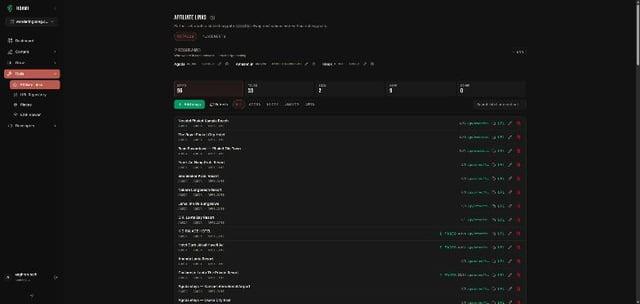
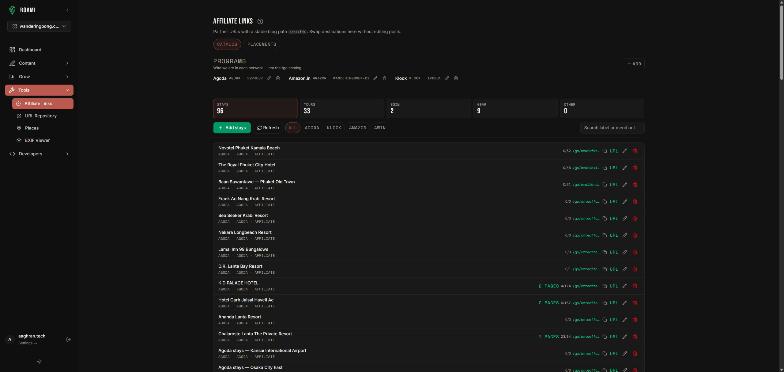
You store each link once (partner, destination, label), and posts refer to it by id. In Roami an affiliate link is a record, and the reader's click goes through a /go/{id} redirect rather than a raw merchant URL in your prose. Commerce blocks such as gear reviews and booking picks use the same ids, so the CTA is /go/{affiliateLinkId} and merchant URLs are kept out of content. The affiliate and commerce catalog shipped on 30 August 2026.
Practical gains:
- Change a destination once; every post updates.
- Search for every post that uses a partner.
- Keep tracking consistent.
- Agents can create and list links (
create_affiliate_link,list_affiliate_links) instead of pasting URLs.
What should the link attributes be?
Google's guidance on qualifying outbound links:
| Value | Google's use |
|---|---|
sponsored | Advertisements or paid placements |
ugc | User-generated content such as comments and forum posts |
nofollow | When other values don't apply; acceptable for paid links but sponsored is preferred |
The page doesn't mention affiliate links by name, so using sponsored for affiliate links is an inference, though a widely used one.
What about disclosure?
The FTC's guidance on material connections says to disclose any financial relationship, including free or discounted products, and to put the disclosure with the endorsement where it is hard to miss.
| Do | Don't |
|---|---|
| Put it next to the recommendation | Bury it in an About page |
| Use simple, clear language | Use vague terms like "sp" or "collab" |
| Use "ad", "advertisement" or "sponsored" | Rely only on a platform's built-in tool |
| Repeat where the context changes | Hide it behind a "more" link |
The FTC page doesn't mention the word "affiliate" specifically, so apply it by extension. This is general information, not legal advice. Check the rules where you and your readers live.
A practical pattern: a one-line disclosure near the top of any post with commercial links, and clear labeling on the block itself.
A travel example
On a trip-planning post you might recommend a stay from Booking.com and a tour from Klook. Each is a record. The post shows a pick block with "who it's for" and "who should skip", and the button goes through /go/{id}. Commerce offers can carry facts such as price range, season, who it's for and who should skip. See One Trip, Three Posts.
| Element | Where it lives |
|---|---|
| Partner and destination | Affiliate link record |
| Price range, season, who for/skip | Commerce offer block |
| Button | /go/{id} |
| Disclosure | Top of post and on the block |
What the agent can and can't do
It can create link records and place blocks in drafts. It cannot publish. You review the disclosure and the picks before anything goes live.
A monthly link audit
| Check | Done |
|---|---|
| Every active link still resolves | ☐ |
| No raw merchant URLs in prose | ☐ |
| Disclosure present on every commercial post | ☐ |
| Expired offers removed | ☐ |
| Top earners get fresher content | ☐ |
Frequently asked questions
Do redirects hurt SEO? The sources used here don't address this; mark links sponsored and keep them out of body prose where editorial links belong.
Should every outbound link be sponsored? No, only paid or commercial ones.
Can I audit all my affiliate links? List them and look for stale destinations. See Blog SEO Audit Checklist.
Try it
Try Roami and add your first link as a record. The feature overview is on the affiliate product page.
Sources (checked 18 Oct 2026)
Next step: connect an agent, or audit your archive first.
Drafted with an agent in Roami, edited and published by Aaghran. This blog runs on Roami.